




In yacht and aviation finance, success depends on more than understanding numbers. High-value assets, complex transactions, regulatory requirements, and long-term relationships all demand a steady hand and a clear understanding of how a business works from the inside. The industry calls for leaders who can turn ambitious plans into practical operations while staying composed when circumstances become difficult.
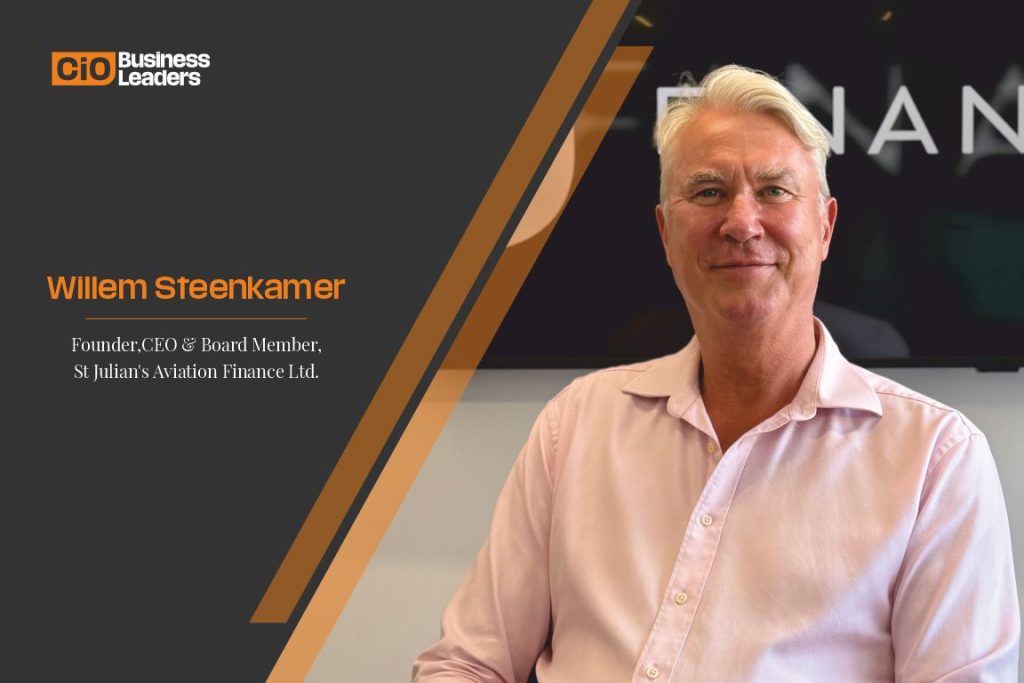
Willem Steenkamer, Founder, CEO & Board Member at St. Julian’s Finance Ltd., has built his career around exactly that balance. With extensive international experience across finance and general management, he has led medium-sized companies through transformation, growth, turnaround assignments, and the establishment of new operations. His approach combines strategic thinking with close attention to execution, ensuring that business vision is translated into results through strong operations and consistent standards.
A confident and resilient professional, Willem is also known for his ability to build teams through active coaching and mentoring. His experience spans both challenging turnaround situations and greenfield operations, giving him a practical understanding of what it takes to stabilize a business, create the right structures, and move it forward. At St. Julian’s Finance, these experiences continue to shape a leadership approach grounded in accountability, people, and long-term business performance.
Aviation Through the Lens of Finance and Operations
Willem’s passion for aviation began when he was appointed as an advisor to the board of a Swedish airline and, shortly afterwards, became its CFO. He was responsible for a fleet of seven aircraft operating on ACMI leases and around 220 employees. It was also his first expatriate role, and he entered the airline business with very little prior knowledge of the industry.
Within two years, he had developed a strong appreciation for the complexity of running an airline, having worked across almost every part of the company. The people around him, particularly the pilots, also shaped his connection with aviation. Their enthusiasm for flying was infectious. Years later, after setting up and reorganizing leasing operations for ING Bank across several countries, Willem founded a successful yacht leasing operation in Malta. The recent move into business jet leasing brings him back to an industry where he recognizes the same passion for high-value products and complex operations.
His interest in aviation and business has always been rooted in understanding how complex systems are put together and made to work reliably. The romance of flight matters less to him than the discipline behind it. Ambitious ventures, in his view, need rigorous structures to succeed.
From Banking Experience to Building an Independent Finance House
After years of building and managing leasing operations within a major international bank, Willem wanted to apply that experience independently rather than within someone else’s structure. That led to the creation of St Julian’s Finance as an independent, asset-backed leasing house.
The business initially focused on yacht financing before expanding into business jets. The move gave him direct control over the company’s operations and direction, rather than having to follow a model established by a larger institution.
That decision changed his professional journey. His role moved from managing a function within a large organization to shaping the direction of an entire company. With that came greater accountability, but also the freedom to make decisions based on his own experience and understanding of the market.
Leadership Shaped by Difficult Situations
Willem’s leadership style has been shaped less by easy successes and more by difficult situations. Insolvent clients, hidden assets and attempted fraud have all tested the business at different points.
Such moments have taught him to remain calm and positive while being willing to look beyond conventional solutions. They have also tested St Julian’s Finance’s asset-backed approach under real pressure, particularly when the value of the underlying asset had to carry the transaction rather than a conventional credit assessment.
These experiences strengthened his confidence in the company’s model. Rather than automatically following the more rigid frameworks used by traditional lenders, Willem believes in understanding the asset and the structure of the transaction and making decisions with clarity and conviction.
Balancing Strategy, Risk and Growth
As CEO, Willem sets the strategic direction of St Julian’s Finance while overseeing risk, regulatory compliance and the consistent application of its asset-backed leasing model.
His responsibilities as a Board Member add another dimension to that role. He brings an operational perspective to the company’s governance while working alongside colleagues with extensive banking and finance experience. The objective is to maintain a balance between ambition and discipline.
The combination of both roles allows him to connect everyday execution with the company’s longer-term direction. In a business where growth depends on developing new client relationships while maintaining the confidence of banks and shareholders that support its transaction pipeline, that balance remains central to the company’s approach.
Financing Built Around the Asset
At the heart of St Julian’s Finance is a straightforward idea: the yacht or aircraft itself should remain the anchor of the transaction rather than a conventional credit profile.
This asset-backed approach gives the company greater flexibility and allows it to provide shorter financing timelines than traditional lending institutions. Its independence also means clients are not restricted to a particular manufacturer through a financing relationship. They can select the yacht or aircraft that genuinely suits their requirements.
The service extends beyond financing. Willem and his team support clients with yacht or aircraft selection, registration through the Maltese Transport Registry, insurance coordination, maintenance and crew arrangements. Working with experienced partners, the company aims to remain a single point of contact throughout the ownership journey rather than simply handling the financing transaction.
Strengthening Malta’s Role in Yacht and Aviation Finance
Willem sees Malta as an important part of the global yacht and aviation finance landscape. Its established yacht and aviation registries have created a strong foundation for companies such as St Julian’s Finance to develop sophisticated asset-backed structures from a smaller independent jurisdiction.
Having established the business as one of Europe’s leading yacht leasing companies and now adding a business jet leasing division, he sees an opportunity to contribute further to Europe’s private yacht and aviation finance ecosystem. Supported by revolving credit facilities in the tens of millions of euros, the company aims to make ownership structures accessible beyond the small group of large, established lessors.
On a broader level, Willem hopes St Julian’s Finance can demonstrate that a flexible, collateral-first approach to yacht and aircraft finance can stand alongside conventional lending and, in some situations, offer a more practical alternative. The Forces Shaping the Next Phase of Leasing
Willem sees three developments shaping the coming years across yacht and aviation leasing. One is the continued demand for flexible, non-bank financing as buyers seek alternatives to conventional lending. Another is growing attention to the environmental footprint of private yachts and jets, creating greater demand for newer and more efficient assets. Technology and data are also becoming increasingly relevant to the way asset values and lease risks are assessed.
St Julian’s Finance is preparing by keeping its model flexible rather than designing it around current market conditions. The company is also strengthening relationships with manufacturers, brokers and service partners so it can respond quickly as client needs change, while closely following the growing role of sustainability in purchasing decisions.
Turning Experience into an Independent Business
Several milestones have shaped Willem’s career, beginning with his first expatriate assignments. He successfully reorganized an airline in Sweden and a car leasing company in Germany, while also working with newly established leasing businesses in Poland, Ukraine and Turkey.
His experience in France proved particularly important, where he reorganized the existing business and successfully established a yacht leasing company. Those assignments gave him the credibility to attract investors and financing banks when he later founded St Julian’s Finance.
Over seven years, the company has grown into one of the leading independent yacht leasing companies, with a portfolio of more than 60 yachts, while also creating the foundation for its expansion into business jet leasing. The journey required turning years of experience in leasing and finance into a company with its own model, risk appetite and client relationships. Seeing that model validated through real transactions has been one of the clearest markers of his professional transformation.
Earning Trust in a Demanding Market
Yacht and aircraft financing brings together high-value assets, lengthy transaction timelines and a demanding regulatory environment. Willem considers building trust quickly with clients, banks and shareholders while maintaining strict risk discipline one of the industry’s continuing challenges.
His approach has been to stay close to the details of individual transactions rather than managing entirely from a strategic distance. He also believes in being transparent with partners about how the company’s asset-backed model works. Over time, that approach has helped build the credibility on which the business now depends.
The biggest challenge, however, has been finding banks prepared to finance high-value, movable assets. Willem remains particularly appreciative of the funding banks that have supported the company throughout its growth.
A Different View of Work-Life Balance
Willem believes professional success should not come at the expense of personal life. In his view, an eight-hour working day should generally be enough to do the job well. Longer hours can reduce efficiency and, over time, affect people’s satisfaction with their work.
That philosophy extends across the organization. He believes the company’s low staff turnover reflects the value of maintaining a healthy balance, while also contributing to consistent service and sustained growth.
It is a principle that reaches beyond the workplace. Willem also sees balance as one of the foundations of his personal life, with his marriage approaching four decades.
Responsibility Starts with the Asset
Sustainability is becoming an increasingly important part of how St Julian’s Finance evaluates the assets it finances, particularly as newer and more efficient yachts and aircraft enter the market.
The company’s asset-backed approach also creates a direct responsibility to understand both the asset and the client’s requirements. Since the asset serves as collateral, Willem believes transactions should be structured conservatively rather than driven simply by volume.
Operating under MFSA regulation further places compliance and responsible risk management at the center of the company’s daily operations. These principles are treated as part of the business model rather than something added afterwards.
Asset-Backed Finance with a Client-First Approach
Willem hopes St Julian’s Finance will develop into a company whose asset-backed, client-first model remains relevant beyond individual market cycles. Strong relationships with manufacturers, brokers and financial institutions are an important part of that ambition.
Across the wider industry, he hopes the company’s experience encourages more independent and flexible approaches to yacht and aircraft finance. His view is that rigorous and well-governed leasing structures do not have to come only from the largest global institutions.
Trust as the Foundation of Leadership
Willem’s advice to aspiring leaders begins with understanding the fundamentals. Finance and risk, he believes, need to be mastered before attempting to build new approaches around them. The strongest leaders in the industry are those who understand exactly what they are underwriting.
He also encourages future leaders to develop their own models rather than simply reproducing the practices of larger institutions. Independence in thinking can create advantages that remain difficult to replicate.
Above all, he sees trust as the real product in yacht and aviation finance. The industry is built around large assets and long-term relationships, making credibility with clients, partners and regulators an asset that grows in value over time.